When the Lanes Turn Slippy: A Winter Taxi Playbook for Liphook
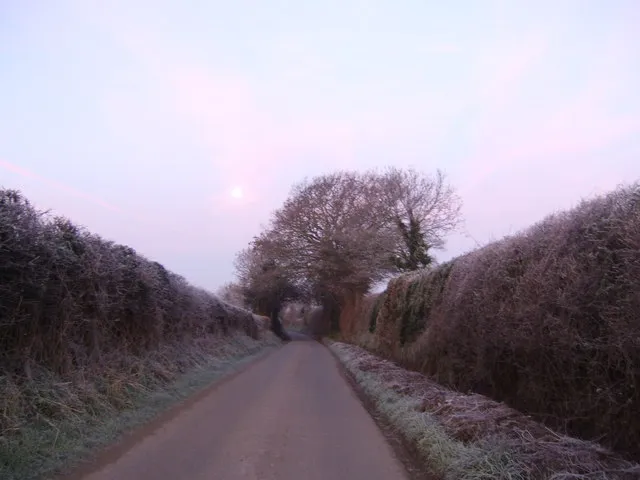
Photo: Jonathan Billinger, CC BY-SA 2.0, via Wikimedia Commons
There's a particular sound a Liphook morning makes in January. Not birds — they've got more sense — but the scrape of a gritter working along Portsmouth Road while somebody down the road clears ice off a windscreen with a debit card. By half past four the light has gone, the temperature has dropped, and every lane between here and Milland seems to have developed its own opinion about whether it fancies being driven on today.
Winter doesn't cancel life, though. School still starts at the same time. The early train to Waterloo still leaves from Liphook station, usually. And there are still people catching dawn flights from Gatwick who would rather not discover black ice at four in the morning on a road they've never driven before.
That's where a bit of forward planning earns its keep. Here's how we tend to approach winter driving around the village — and what's worth knowing before you book.
No two lanes behave the same way
People often talk about "the roads round Liphook" as if they're one thing. They aren't. The A3 at Hindhead is a completely different animal from the single-track stretch past Conford, and both are different again from the run down through Griggs Green towards Passfield.
What that means in practice:
- Frost sits differently in the dips. Shaded hollows and lanes with hedges tight on both sides hold ice long after the main roads have cleared.
- Water goes where it wants. After a wet week, low-lying bits near Hollywater and out towards Woolmer can be more pond than carriageway. Drivers know the usual suspects and will route around them.
- Fog loves the high ground. Weavers Down and the lanes above the village can be clear at the bottom and pea-soup at the top.
- Grit only goes so far. Priority routes get treated; the little lanes between villages often don't, and won't be.
None of that is a reason to cancel your plans. It's a reason to build ten minutes of slack into them and to let someone who drives these roads daily make the call on the route.
Why pre-booking matters more in winter
On a mild June afternoon you can ring up half an hour ahead and probably be fine. In February, at 6:40am, with three cars off the road and one driver stuck behind a fallen branch, that half hour becomes a lot tighter.
Book the day before where you can — earlier for airport runs. Two reasons. First, your journey gets planned into the day properly rather than squeezed in. Second, if the forecast looks grim, there's time for a conversation about leaving earlier, meeting somewhere easier, or adjusting the pickup point.
If you're on a fixed timetable — a flight, a hospital appointment, a train you genuinely cannot miss — say so when you book. "I need to be at the terminal for 5:15" gets treated differently to "sometime around five-ish".
Pickup points that actually work on a narrow lane
This is the bit people underestimate. A lot of properties around here sit at the end of an unlit track with a tight gate and nowhere sensible to turn. In summer that's charming. In the dark, in the rain, with a suitcase, it's a faff for everybody.
A few things that help:
- Tell us about the track. Gravel, mud, steep, width, gate codes, overhanging branches — all useful. It saves a phone call at 6am.
- Agree a fallback spot. If the lane is genuinely impassable, where's the nearest safe place to meet? A pub car park, a village hall, the wide bit by the crossroads.
- Don't stand in the road to flag us down. Hazards on, headlights on, and stay on the verge or driveway. Country lanes have no pavement and drivers come round blind bends faster than they should.
- Have a torch on your phone. Not glamorous, but you'll be glad of it when you're checking you've got the right car.
The route might not be the obvious one
If your driver takes a longer way round than you'd expect, there's usually a reason: a flooded ford, an untreated hill, a closure on the A3 after an incident, or simply a back road that's been gritted when the short cut hasn't.
A few minutes added to the journey is a fair trade for arriving at all. We'd rather explain the detour than apologise for a dented wing mirror in a hedge.
School runs, station dashes and early flights
Winter hits different journeys in different ways.
The school run gets slower because everyone's de-icing at once and the narrow bits near the school gates become a scrum. Booking a slightly earlier pickup is usually all it takes.
Station runs are the ones that catch people out, because missing a train has a knock-on effect on the whole day. The trick is to treat the drive to Liphook station as the long part, not the platform wait. Build in the extra ten minutes and the stress evaporates.
Airport transfers are the least forgiving of all. A 4am departure to Gatwick or Heathrow in December needs a plan B baked in from the start — a buffer, a checked forecast the night before, and a driver who's already looked at the gritting map. If conditions look genuinely awful, we'll say so early rather than gamble with your flight.
What to expect from a local driver
You should expect a few things as standard in poor weather: a car that's been cleared properly rather than had a porthole scraped in the windscreen, sensible speed and no heroics on untreated bends, and a phone call or message if we're running behind because of conditions.
You should also expect honesty. If the lane to your cottage is a skating rink and we can't safely get down it, you'll be told that straight, along with the best place to meet instead. Nobody wants a driver who pretends everything's fine.
A small winter kit list
Nothing dramatic, just the things that make a cold-morning pickup smoother:
- Bags packed and by the door the night before
- Phone charged, with the booking confirmation to hand
- A warm layer you won't mind sitting in for an hour
- Cash or a card for the fare, and a rough idea of the total
- The postcode, not just the house name
The bottom line
Winter around Liphook is beautiful, bracing and occasionally a bit slippery. Frost on the heath at sunrise is worth the early alarm. Just don't ask a country lane to be something it isn't in January — book ahead, be flexible about where you're collected, and let the detour happen.
If you're planning a run to the station, the airport, the school gate or the shops over the coming weeks, get it in the diary early. Cold weather rewards the organised, and it's a lot warmer in the cab than at the end of the drive.