After the Last Dance: Getting Every Wedding Guest Home from a Liphook Venue
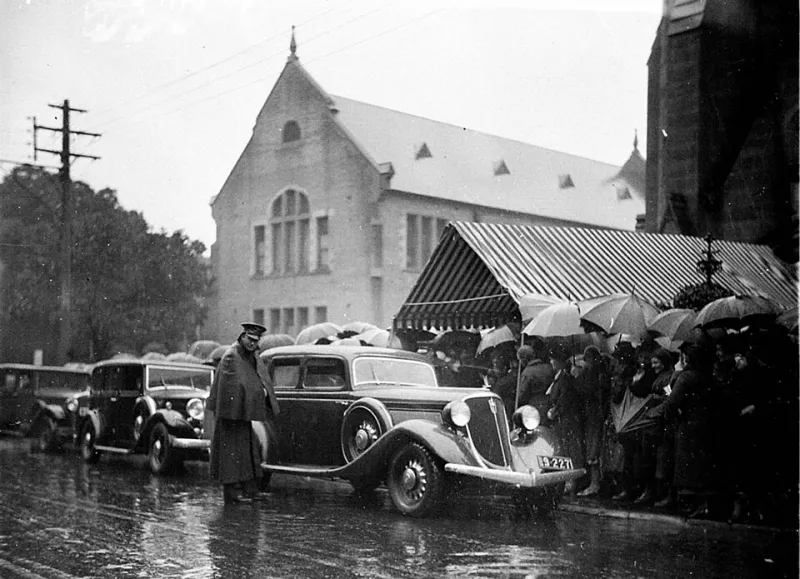
Photo: Sam Hood, Public domain, via Wikimedia Commons
It's ten past eleven on a Saturday night in June. The band has played its last song, the venue's staff are stacking chairs with the quiet efficiency of people who want to go home, and somewhere near the bar a woman in a very good hat is asking, with increasing urgency, whether anyone knows a taxi number.
We've seen this film. It's the same every summer, and it's almost entirely avoidable — not because wedding parties are disorganised, but because the transport is always the last thing anyone thinks about and the first thing anyone panics about.
So here's the case for sorting it early. Not a lecture, just the stuff that makes the difference between drifting off into the night and a forty-minute scrum in a car park.
Start with the venue, not the guest list
The instinct is to count heads first. In our experience, it works better the other way round. Look at where you're actually going and how people will get out of it.
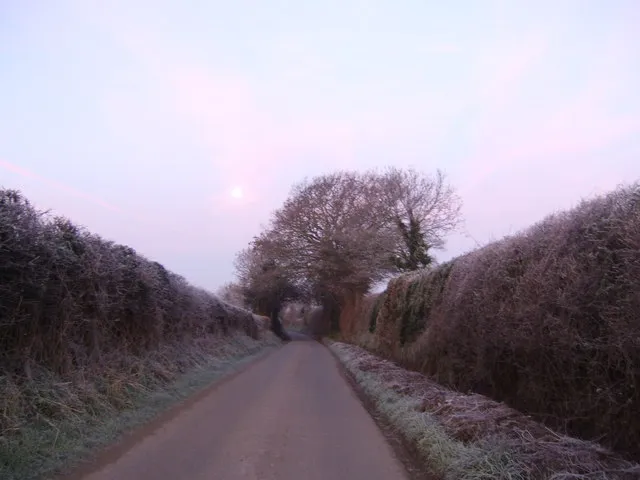
A venue on the edge of Liphook with a proper drive and a lit car park is a completely different proposition to a barn up a single-track lane past Milland with a coded gate and a field for parking. One can take a minibus comfortably; the other might need three cars arriving in convoy, because there's nowhere to turn and the drive is gravel.
Practical questions worth asking the venue before you ring a taxi firm:
- Where exactly can vehicles pull up to drop off and collect?
- Is there a barrier, gate or code that drivers will need?
- Is the drive lit, and is it tarmac or gravel?
- Is there room to turn, or will cars need to reverse out?
- Do they have a preferred arrangement for late-night collections?
A two-minute call saves an awful lot of beeping horns at half eleven.
How many cars do you actually need?
This is where people either over-order and wince at the cost, or under-order and leave someone ringing round. The rough maths works out at a car, or a seat allocation, per small group travelling together rather than per person.
Think in clusters:
- The family cluster. Four or five people who all live within a few streets of each other in Petersfield or Bordon.
- The hotel cluster. Guests staying at the same pub or B&B — one run, dropped in one place.
- The locals. People from the village who could genuinely walk, but won't, because of the shoes.
- The fragile cluster. Grandma, the great-aunt, the couple with a six-week-old. These need a car of their own and probably an earlier departure.
Put a name next to each cluster — a friend or relative who makes sure those people are actually in the car park at the agreed time — and half the problem disappears.
The staggered pickup, and the "one more drink" problem
Nobody all leaves at once, and pretending otherwise causes friction. The trick is to schedule departures in waves rather than one big evacuation.
A pattern that works well:
- The early wave, around the start of the dancing. Older guests, anyone with a long drive tomorrow, and small children.
- The middle wave, just after the first dance or the buffet — often couples staying locally who want a nightcap at the pub.
- The last wave, once the bar closes, for the die-hards.
Build the first two waves into the plan and the last one becomes manageable. And do be honest about the third: if the venue's bar runs until midnight, expect people to leave at midnight. A car booked for 11:15pm will be sitting there with the meter running while someone finishes a conversation they'll never remember.
Rural venue access is its own skill
Wedding venues out this way are often lovely precisely because they're in the middle of nowhere. That's also why the last hundred metres can be the hardest part of the journey.
Things that genuinely help:
- Have the venue send the gate code to the driver, not just the guests.
- Ask for a photo of the entrance in daylight — arriving at a dark field with three possible gates is not a great feeling.
- Warn us about the drive surface. Gravel in heels is a hazard; gravel on a slope in the rain is worse.
- Nominate one person from the wedding party who will have their phone on and can be rung if a driver can't find a group.
If the lane really is impassable for anything larger than a hatchback, say so at the booking stage. A minibus is a wonderful thing until it meets a humpback bridge.
Plan the ending before the first dance
Here's the bit nobody does and everybody should. Somewhere between the speeches and the cake, sit down with your other half and your best man or maid of honour and answer three questions:
- Who is the last person we need to be sure gets home?
- What time is the final departure?
- Who is responsible for making sure the answer to question one is in the car by then?
That last one is the stranded-auntie protocol, and it's usually where the whole thing falls down. One nominated person, one agreed time, one car. Not a group chat at 11:50pm.
We've collected a bride's grandmother from a venue bar at twenty past midnight before. She was perfectly happy, to be fair, but the bride wasn't.
The odd logistics that get forgotten
A few small things that come up again and again:
- Overnight bags. If guests are moving from ceremony to reception to accommodation, bags need somewhere to live. Often that means an extra run in the afternoon.
- The confetti-and-heels situation. People won't want to walk far in the dark dressed like that, which is exactly the point of a car.
- The morning after. Nearly every wedding forgot to sort the return trip to the station for Sunday's departures. Sort it.
- Cash in small notes. Useful for a group chipping in, even if the fare is on a card.
Budget it per head, not per car
When you divide the total by the number of guests being moved, wedding transport nearly always looks more reasonable than it feels when you're staring at a quote. The number that matters isn't what a car costs — it's what the evening costs if half your guests are still standing in a car park at midnight, flagging down anything with a roof.
And practically speaking, a booked car costs less than three separate 1am surges with everyone on their phones at once.
Book it while the sun is still out
Wedding season around Liphook runs hot from May to September, and Saturday nights in particular go quickly. Get in touch once you have the venue and the date — even if the guest numbers are still shifting. Numbers are far easier to add later than cars are to magic up on the night.
Because the goal, when you strip it all back, is a very simple one. The last dance finishes, everyone's had a lovely time, and by half past midnight the only people left in the car park are the staff and a stray piece of bunting.
That's the ending worth planning for.