Meters, Quotes and Splits: How Liphook Taxi Prices Actually Add Up in 2026
Ask two Liphook drivers what a run to Haslemere should cost and you might get answers a few pounds apart. Nobody's being dodgy. Local taxi pricing simply isn't one number written on a wall — it's a mix of distance, time, vehicle size, when you travel and how the job was booked. Understand those moving parts and the number on the meter stops feeling like a mystery.
Two pricing worlds: the meter and the quote
Almost every taxi fare you'll pay around Liphook falls into one of two buckets.
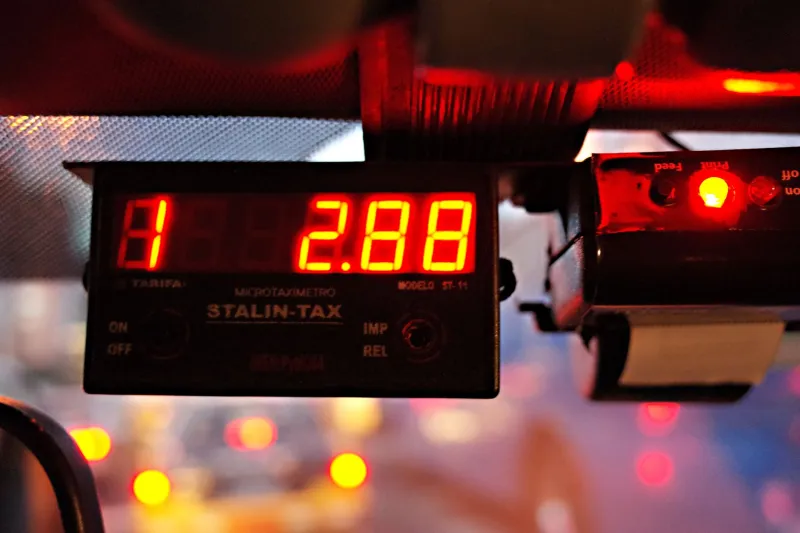
The first is metered or tariff-based pricing, used for shorter, unplanned hops — the station to home, a lift into the village, a quick run to a friend's in Bramshott. The meter (or a printed local tariff that does the same job) counts distance and time, and it may nudge up a band in the evening, at weekends or on a bank holiday.
The second is the fixed quote, which is what you'll usually get for airports, cruise terminals, wedding venues and anything booked well in advance. The driver looks at the route, the likely traffic, the pickup time and the waiting involved, and gives you one price agreed before you set off. It doesn't wobble if the A3 is slow that morning.
Neither method is better than the other. They're just suited to different jobs.
What actually moves the meter
People often assume it's purely miles. It's closer to miles plus minutes, with a few extras layered on top.
- Route and distance. The obvious one. The A3 is quick when it behaves; the lanes are prettier and slower. A sensible driver picks the route that gets you there, not the one that pads the fare.
- Traffic and time. A meter keeps ticking while you sit still. That's not a scam — the driver's time is the thing being sold.
- Time of day. Evenings, weekends and public holidays frequently sit in a higher tariff band. Worth knowing if you're booking a late one back from a pub lunch that ran long.
- Passenger numbers. A standard car seats four. Five or more usually means a larger vehicle, and that's a different price.
- Luggage and bulky items. A couple of bags is nothing. A boot full of flat-pack furniture, a folded pushchair and three suitcases is a different conversation.
- Waiting. More on this below, because it's where most surprise charges come from.
Fixed quotes: read the small print, politely
A fixed airport price is only genuinely fixed if you know what's inside it. When you compare quotes, it's fair to ask a few direct questions:
- Is this per vehicle or per person? It should almost always be per vehicle.
- Does it include the airport drop-off charge or terminal parking? Gatwick and Heathrow both charge for the privilege of pulling up.
- Is meet-and-greet included — driver inside with a name board — or is it a kerbside pickup?
- What happens if your flight is delayed? Good operators track the flight number and adjust; it's worth confirming rather than assuming.
- How long is the quote valid for? Prices move, and a quote from three weeks ago may not be honoured forever.
None of this is awkward to ask. Any decent local firm would rather answer five questions now than argue about a fare later.
The waiting game
Waiting time is the quiet line item. Most quotes include a chunk of free waiting — commonly around fifteen minutes for a station pickup and closer to an hour at an airport, since bags take time to appear. Past that, it's usually charged in blocks.
Two habits keep this cheap. First, give your flight number or train when booking, so the driver can watch for delays instead of idling on speculation. Second, keep your phone on and answer it. A driver circling a terminal for twenty minutes because nobody picked up is a cost that ends up somewhere.
Seats, suitcases and the group maths
This is the most common cause of a quote that changes on the day. Four adults heading to Gatwick with four large cases and hand luggage is not a four-seat saloon job, however many seatbelts it has. Be honest about numbers and bag sizes when you book, and the right vehicle turns up first time.
The flip side is that taxis get cheaper per head the fuller they are. A £60 run split six ways is a tenner each — often less than the train once you've added parking, and considerably less hassle. For a group night out or a shared airport run, that maths is hard to beat.
How to compare quotes without building a spreadsheet
To compare fairly, compare like with like:
- Same journey, same pickup time, same number of passengers and bags.
- Ask each firm what's included — drop-off fees, waiting, meet-and-greet.
- Check whether the price is fixed or an estimate. Both are legitimate, but you should know which you've been given.
- Confirm the firm is licensed and insured for hire and reward. It's a fair question and takes seconds.
The cheapest quote isn't automatically the best value if it excludes the drop-off fee, or if the firm can't actually cover the job.
Small habits that keep the fare boring
Predictable fares are mostly about predictable bookings:
- Book ahead where you can — a planned job is easier to price than a last-minute scramble.
- Give the full address and postcode, not just the pub name.
- Be ready at the pickup time. Waiting is chargeable for a reason.
- Bundle errands into one loop rather than three separate hops — one journey, one fare.
- Ask about a return pickup when you're dropped off. It's often simpler than phoning from the pavement later.
The short version
Local hops run on the meter; planned journeys run on a quote. Distance and time do most of the work, with vehicle size, timing and waiting filling in the rest. Ask what's included, describe your group and bags honestly, and book with a bit of notice. Do that, and the price you're told is the price you'll pay — which is really all anyone wants from a taxi.