The Diversion Diaries: Keeping Liphook Taxi Journeys on Track in 2026
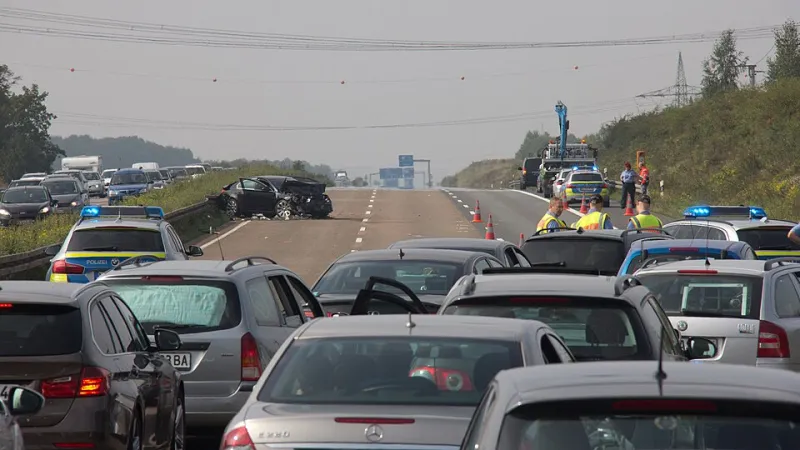
Photo: Raimond Spekking, CC BY-SA 4.0, via Wikimedia Commons
The A3 has a habit of making Liphook feel both brilliantly connected and suddenly very rural. One minute you are ten minutes from the Hindhead tunnel; the next there is a yellow sign, a lane closure and a diversion that seems to add a postcode to your journey. In 2026, roadworks and event traffic are still part of local life, so a bit of taxi planning goes a long way.
This is not about scaremongering or suggesting every trip will be a saga. Most Liphook taxi journeys run perfectly well. But when the A3 is closed, narrowed or snarled up, the difference between a calm departure and a stressed one is usually information, timing and a sensible pickup point.
Why the A3 feels personal in Liphook
Liphook sits close enough to the A3 that many local journeys lean on it, even when the sat-nav says otherwise. Airport runs, station pickups, hospital appointments and nights out towards Guildford or Portsmouth can all feel the knock-on effect. When the main road misbehaves, traffic often spills onto the lanes around Bramshott, Griggs Green and the older village roads. Those routes are lovely on a quiet Sunday. On a wet Tuesday morning with a closure in place, they can be slow and narrow.
That is why a good taxi booking is not just a price and a time. It is a plan. If your driver knows the closure, the likely diversion and the sort of vehicle that suits the lanes, you are already ahead.
Build in the right buffer, not a random one
Adding time is easy to say and harder to judge. For a local errand, ten to fifteen minutes may be plenty when there is a known lane closure. For an airport run, especially a dawn departure from Heathrow or Gatwick, allow more. A sensible starting point is an extra 30 to 45 minutes when a full A3 closure is advertised, and longer if the closure overlaps with rush hour, school traffic or a major event.
For appointments, station pickups and theatre nights, think backwards from the time you actually need to be through the door, not the time you would like to arrive. If you are catching a train from Liphook station, the buffer needs to include the walk, the platform and the chance that the taxi cannot use its usual approach. If you are flying, remember that check-in and bag drop are fixed. The road is the variable.
It also helps to know which closure you are dealing with. A short overnight closure is a different beast from a weekend closure with signed diversions. Mention the date and direction of travel when booking, because Liphook to Gatwick and Gatwick to Liphook can behave very differently depending on where the works sit.
Smarter pickup points around Bramshott and Griggs Green
When the main road is congested, the first question is often whether to meet the taxi slightly away from the worst of it. Around Bramshott and Griggs Green, a pickup on a safer, wider stretch can save time and avoid awkward three-point turns in narrow lanes. The key word is safe: never suggest a stop on a bend, a blind verge or a spot where the driver would be blocking someone’s driveway.
Good options are usually established lay-bys, village hall car parks, pub car parks with permission, or a clear residential road with space to pull in. If you are staying at a hotel or venue, ask reception whether they have a designated pickup point. If you are at home, tell the operator about any parking quirks, low branches, gravel or tight entrances. A driver who knows they are collecting from a farm track in the dark will make a better decision than one who finds out on arrival.
For group bookings, it is worth agreeing one pickup rather than three. A single, easy-to-find point near Bramshott or Griggs Green can be quicker than threading through lanes to collect everyone separately, especially when traffic is being diverted.
Questions to ask when booking
You do not need a spreadsheet, but a few direct questions can make all the difference. Ask whether the operator is aware of the specific closure or roadworks on your date. Ask what extra time they would build in for your journey. Ask whether the quoted fare covers diversions and waiting, or whether there is any chance of a surcharge if traffic is awful. Most reputable local firms will be upfront.
If you are booking an airport transfer, confirm the pickup time and the latest sensible departure time. If you are heading to a station, ask whether the driver will check the train before setting off. If you are going out for the evening, ask about the return pickup and whether the driver will monitor event traffic. Small details, calmly handled.
Airport runs, appointments and nights out
Airport transfers are where A3 trouble bites hardest. A closure on the wrong morning can turn a comfortable run into a tense one, so it is worth choosing a firm that plans routes rather than simply following the blue line on a screen. The same applies to hospital and clinic appointments, where arriving flustered is the last thing you need. For nights out, the risk is usually the return leg: a venue emptying at the same time as a diversion can make the pickup point feel like a puzzle.
In all three cases, the answer is similar. Book early, share the exact postcode and any access notes, agree a realistic pickup window, and keep your phone on. If plans change, tell the operator as soon as you can. A good Liphook taxi service would rather adjust a booking than discover the problem at the kerb.
A calmer way through the roadworks
The A3 will never be entirely predictable, and that is fine. Liphook is still a practical place to travel from, and most diversions add minutes rather than hours. The trick is not to pretend the roadworks are not there. It is to book with a little local knowledge, leave with a sensible buffer and choose a pickup point that keeps everyone safe.
If you are planning an airport run, an appointment or a night out in 2026, mention the roadworks when you book. A few extra details now can save a lot of staring at tail lights later.